Ahrend u. Brunzema Opus 1 USA, 1967
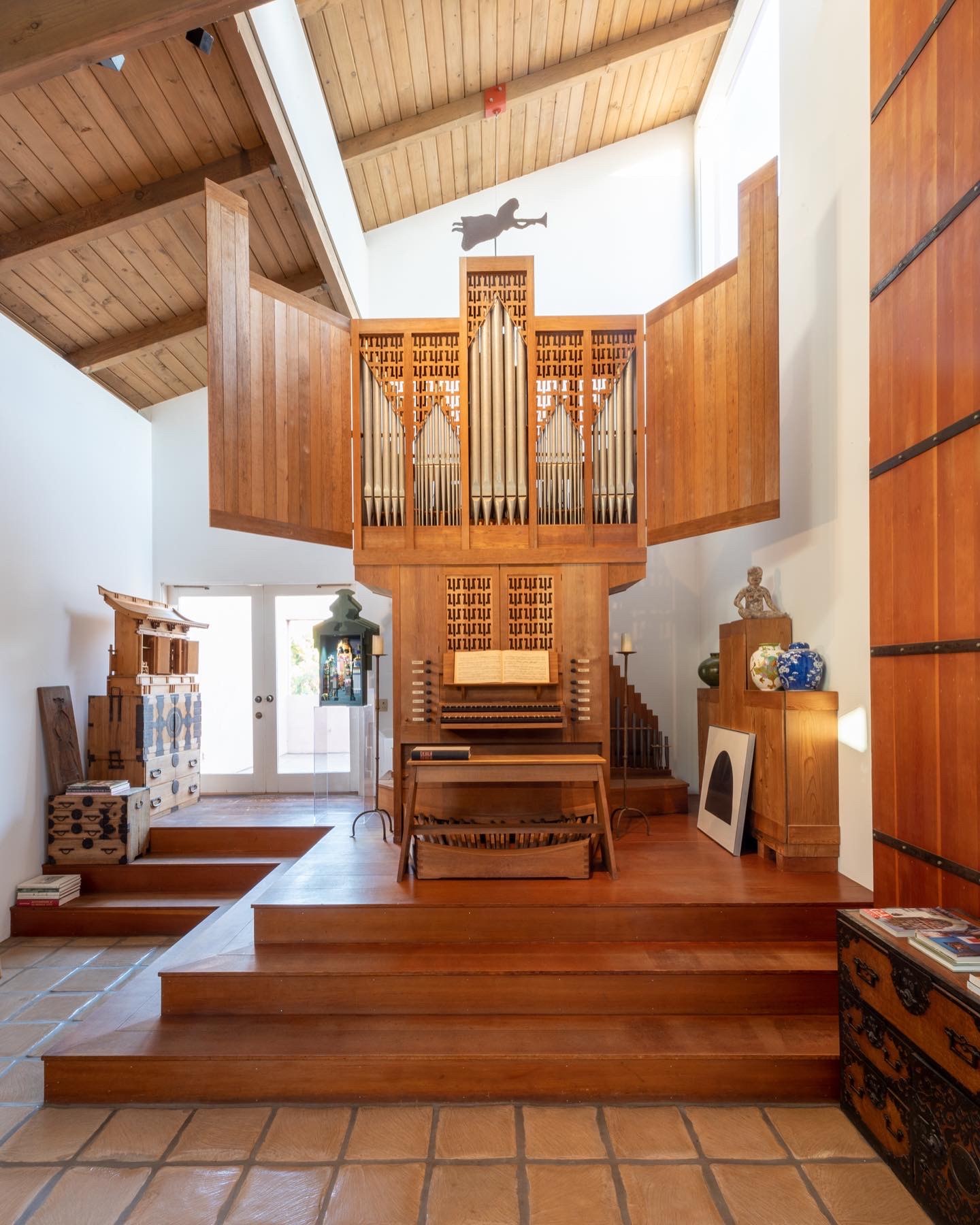
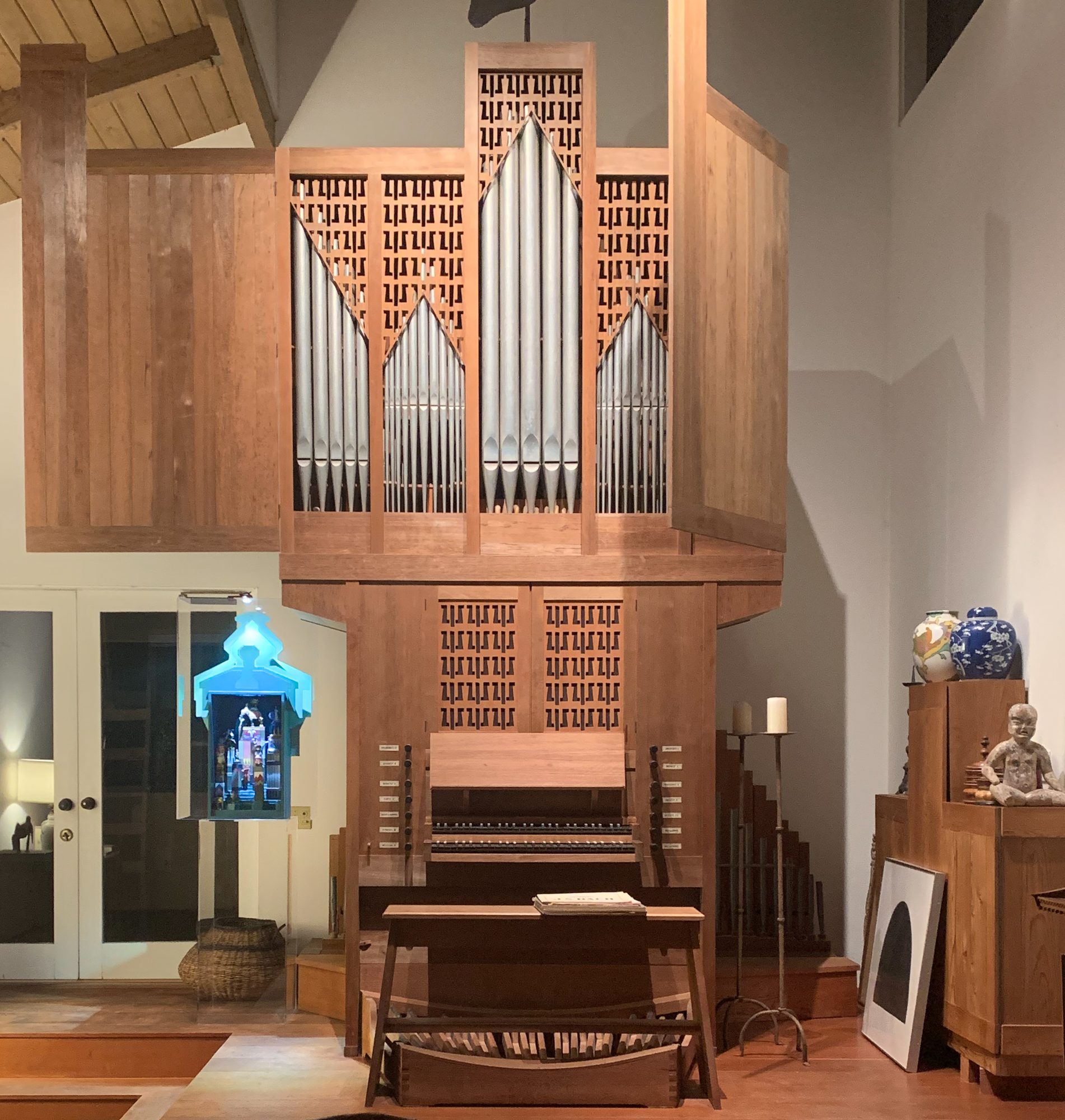
The splendid Ahrend u. Brunzema pipe organ at the Burns House was built by Jürgen Ahrend and Gerhard Brunzema at their shop in Ostfriesland, North Germany. They were known for their sensitive restorations of antique organs and their historically informed new organs. The shop is now called Jürgen Ahrend Orgelbau.
When Leland Burns was in the Netherlands in 1961 on a Fulbright scholarship, he became close friends with several important musicians who were active in the burgeoning Early Music Movement. He learned of Ahrend and Brunzema from them. After visiting the organ building shop, he commissioned a house organ, and it was delivered to California in 1967 as their Opus 48 (Opus 1 USA) and installed in his Los Angeles house.
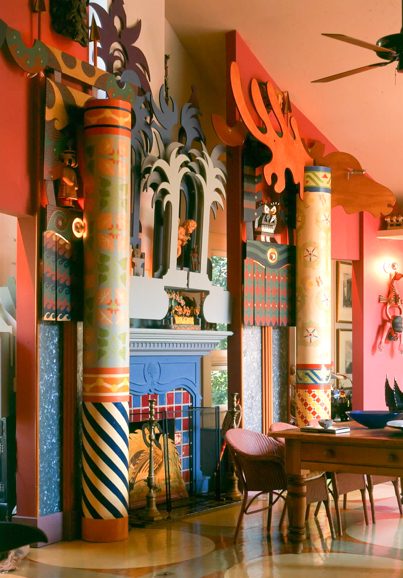
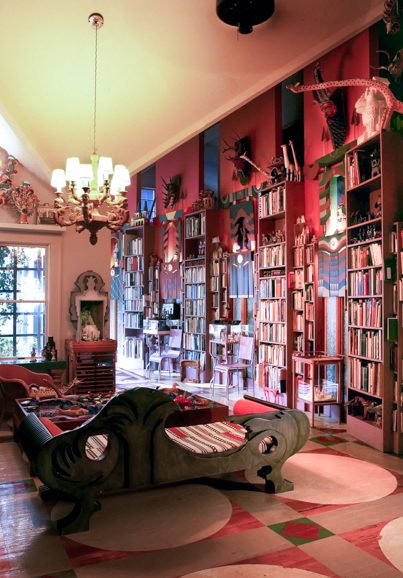
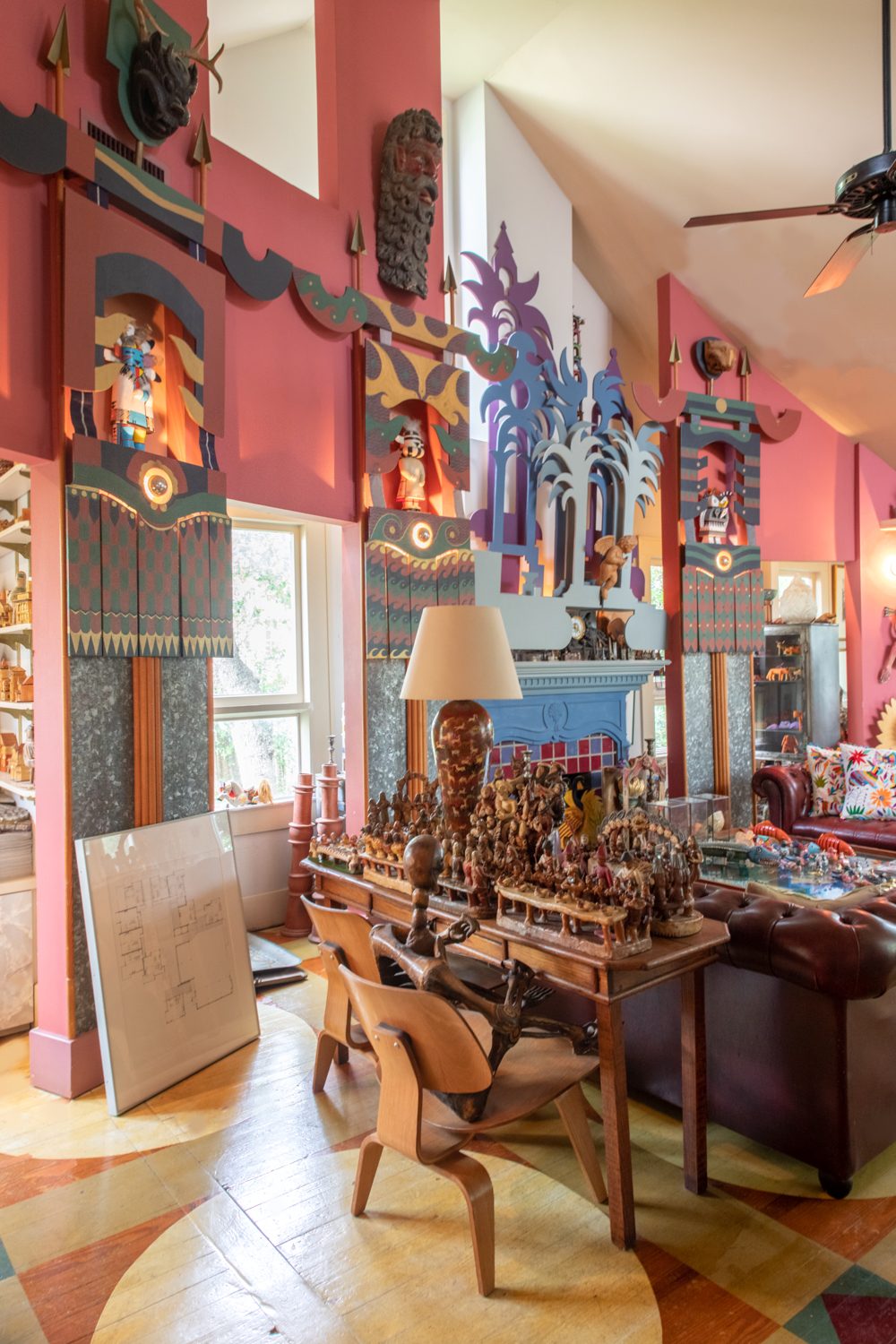
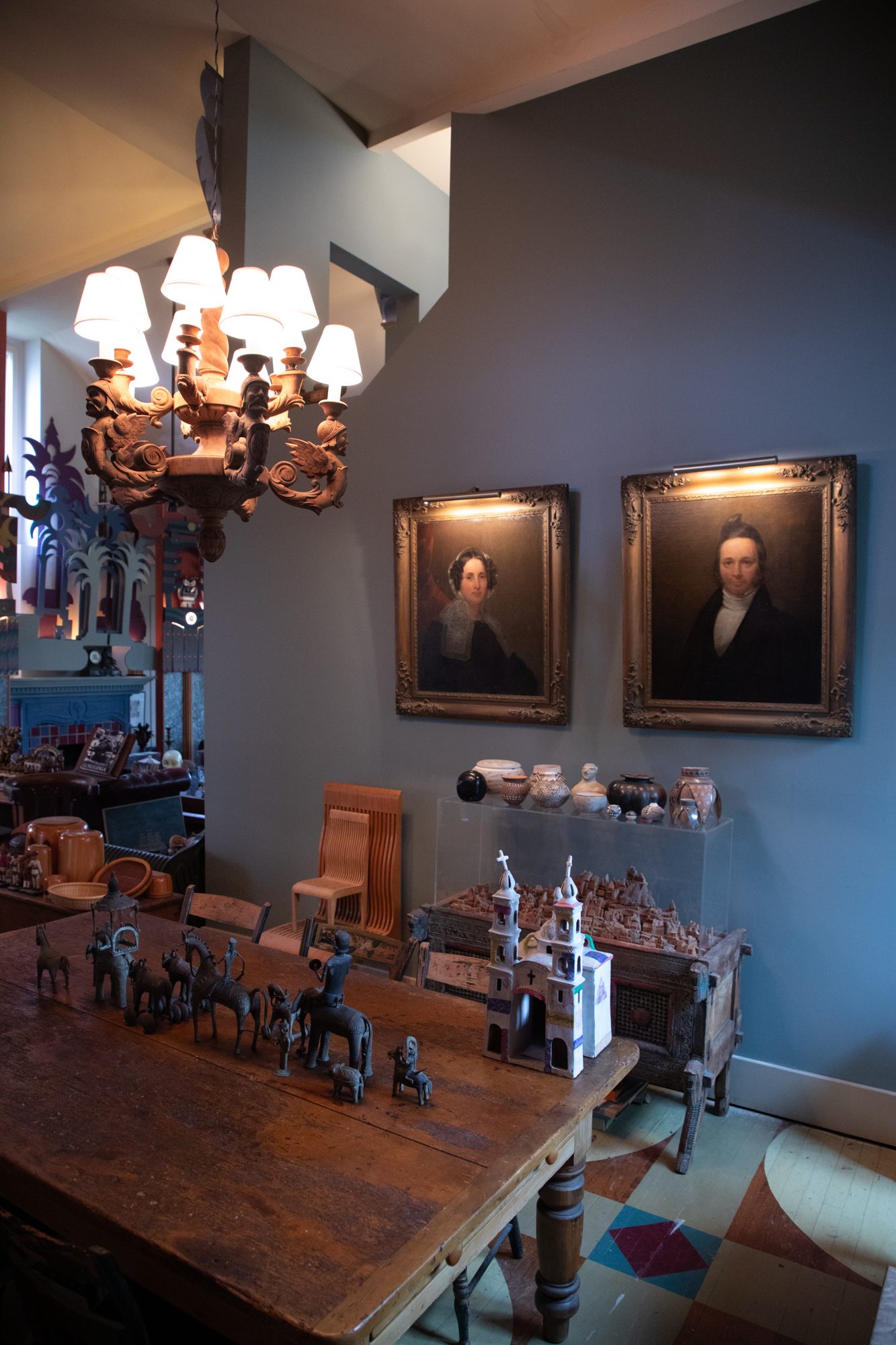
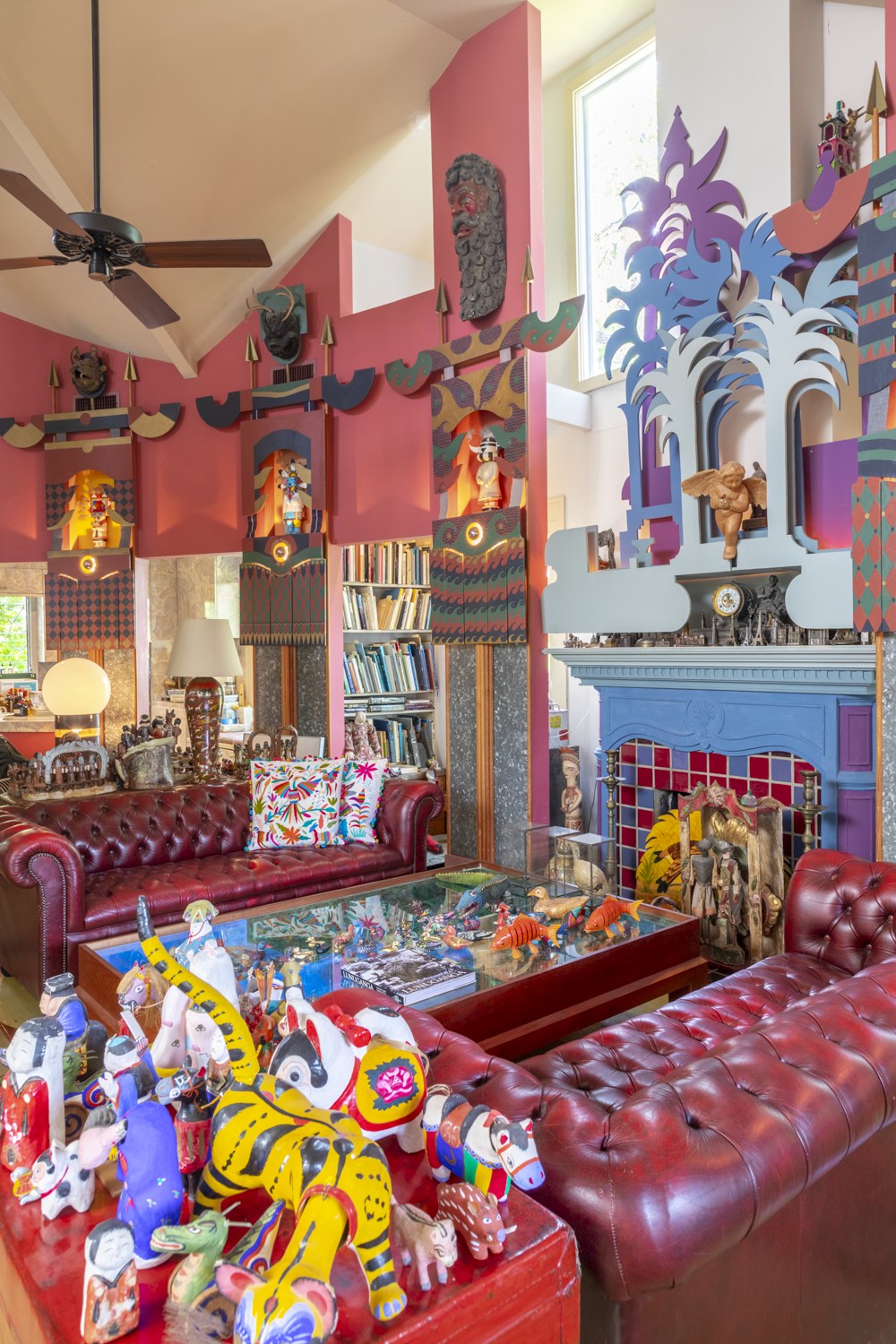
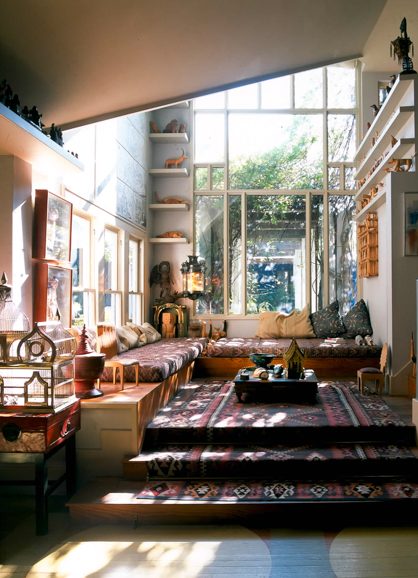
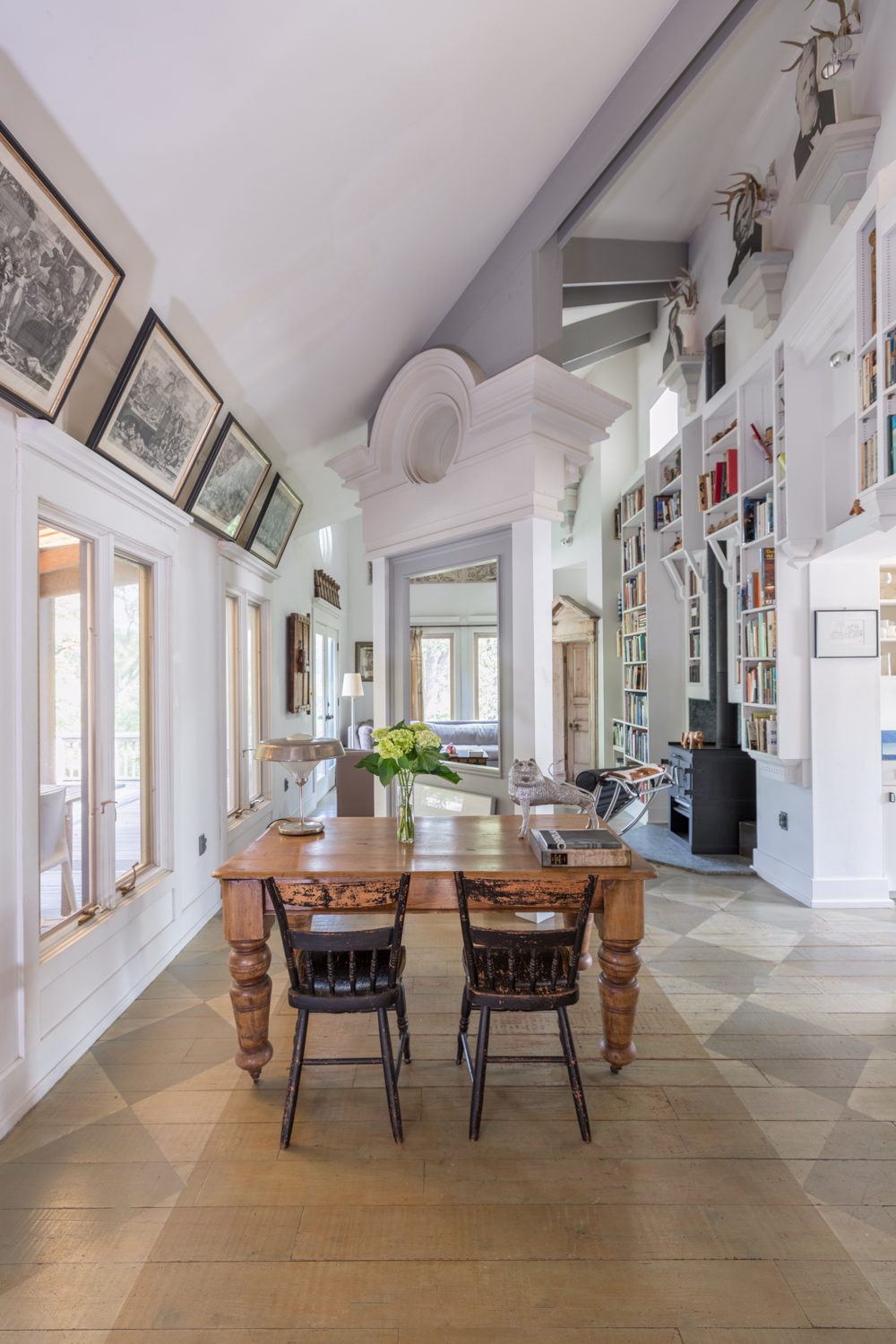
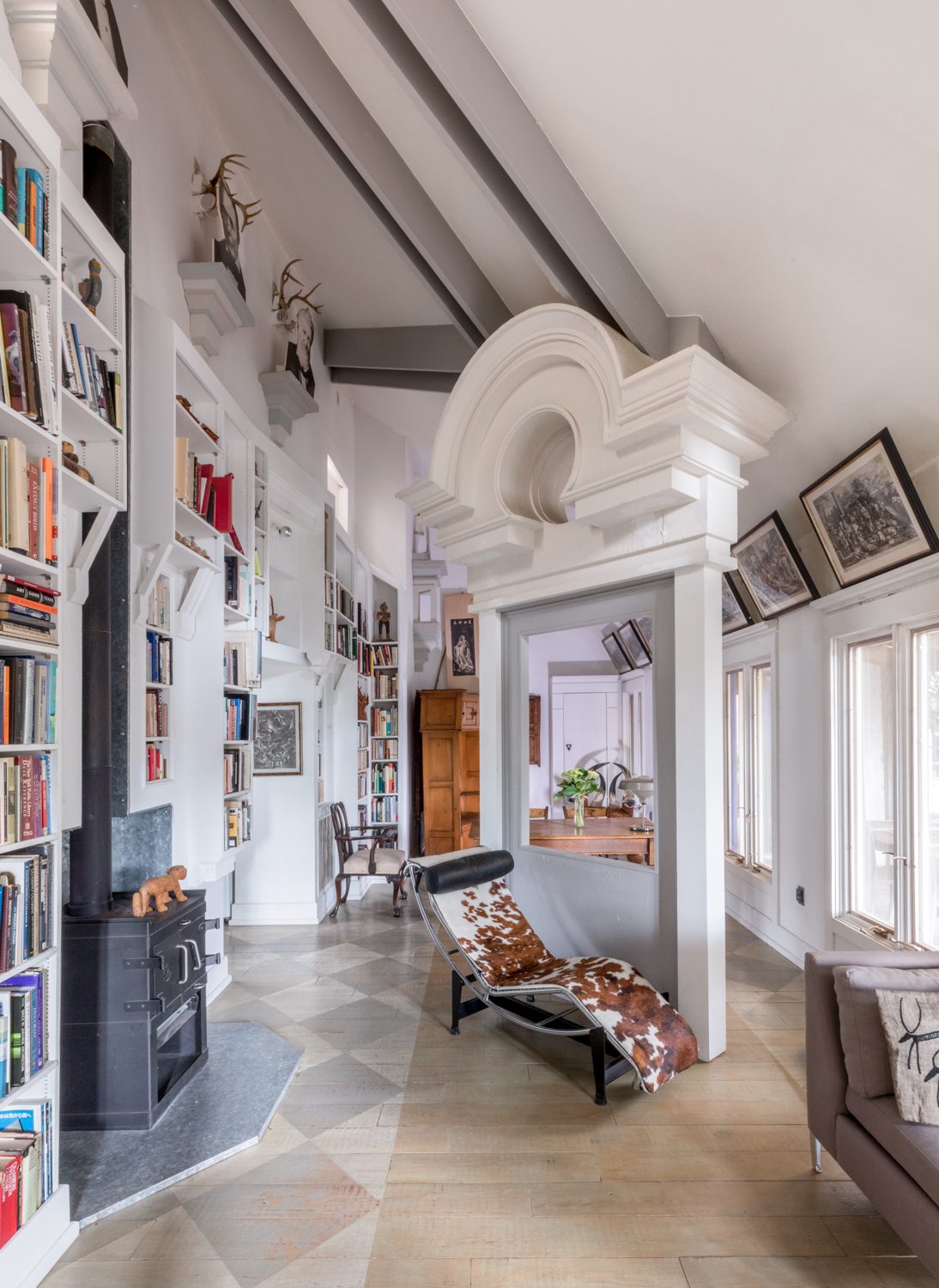
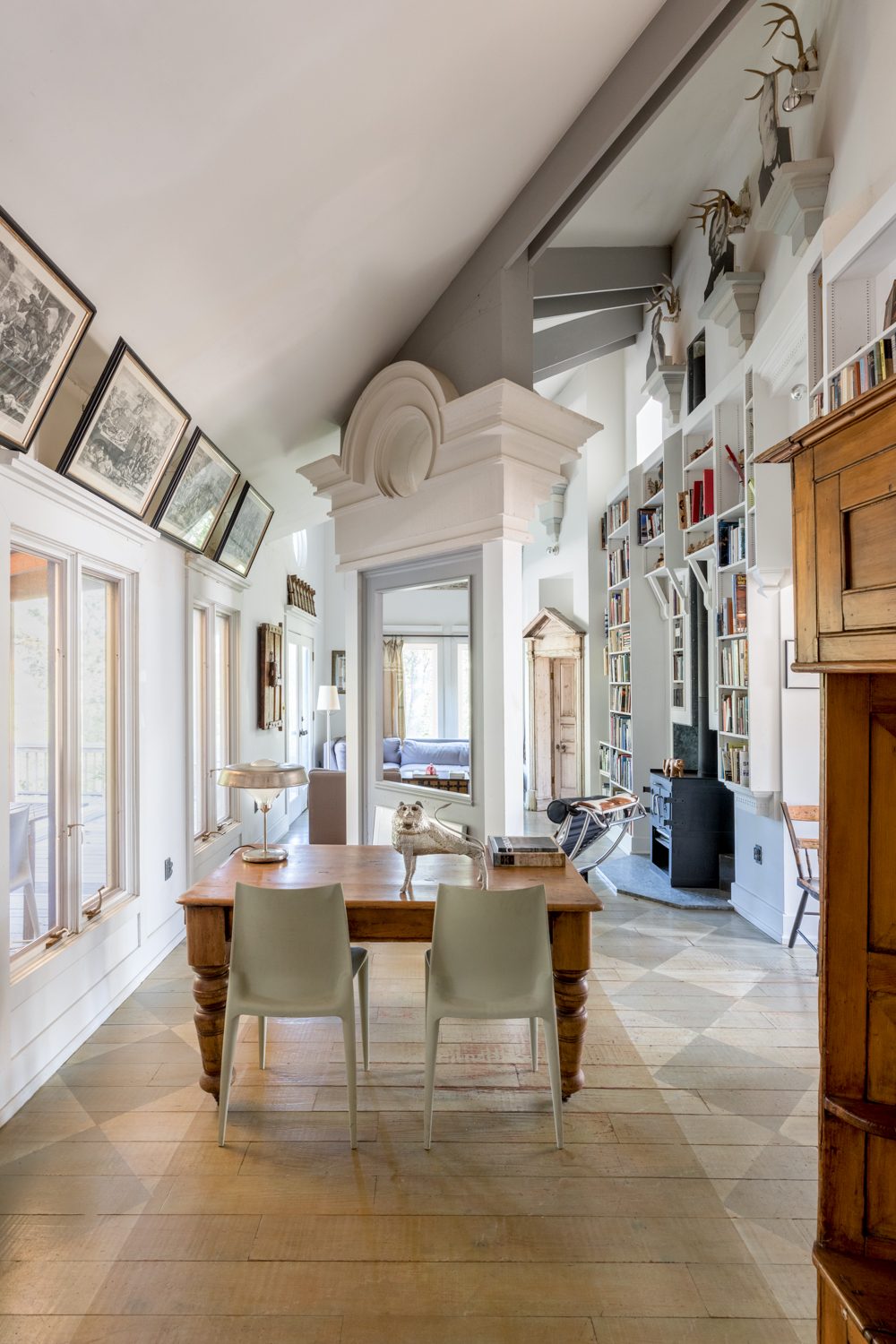
Burns was a friend and colleague of Charles Moore, who was commissioned by Burns to design his new house in Santa Monica Canyon (Los Angeles). The house was completed in 1974 and the organ was moved to and set up in its great room, a room designed to feature the organ. The room can be closed off from the rest of the house by large sliding doors.
The organ has 546 pipes making up eleven stops. It has two manuals and pedal. Its case is made of quarter-sawn Western Red Cedar, a wood native to western North America. The front pipes are made of tin, the inside metal pipes are made of a tin/lead alloy. Some pipes are made of Pine or Western Red Cedar. Two of the stops are reed pipes. The bellows and electric blower are in the basement below the organ. The sound of the organ is colorful and bold.
—Manuel Rosales
Hauptwerk
Praestant 8’
Gedackt 8’
Octave 4’
Flöte 2’
Quinte 1-1/3’
Brustwerk
Holzgedackt 8’
Holzflöte 4’
Octave 1’
Rankett 8’
Pedal
Subbass 16’
Dulzian 8’
Manualkoppel
BW an Pedal
HW an Pedal
Tremulant
Organ Builders Manuel Rosales and Greg Harrold completed a nine-month long project to restore and tune the Ahrend & Brunzema organ that was custom built for Lee Burns in 1967.
Rosales and Harrold's work included the restoration of deteriorated leather components, the construction of a new bellows and new enclosure for the organ’s blower and motor, a new control system for the blower motor, repair of the tremolo, and complete cleaning and tonal regulation of the 546 pipes.
Seismic bracing was enhanced, including a new platform from which the pipework in the upper case can be accessed more efficiently.
Rosales and Harrold's final phase at the Burns House allowed them to complete the tuning in its original temperament of “Werckmeister III”, preparing the instrument for upcoming concerts and residencies.
The Klaus Ahrend Harpsichord
In June 2023, I emailed Hendrik Ahrend in Leer, Germany. “I know this is remote possibility, but should you ever learn of one of your uncle’s harpsichords becoming available, would you let me know?” (The late Klaus Ahrend was the brother of Jürgen Ahrend, who built the Burns House organ, the first outside of Europe.)
Only hours later, I received a reply: “I’m amazed you asked me this question. Two days ago, I heard for the very first time ever one of Uncle Klaus’s rare instruments becoming available, when Timothy Roberts in London contacted me for advice about finding a new home for his harpsichord.”
Hendrik put me in touch with Timothy, a fine player who inherited the instrument from Martin Birnstingl, a British surgeon and husband of the architect Renate Prince. They had commissioned Klaus Ahrend to build this harpsichord for their famous Modernist flat in Hampstead.
When I suggested to Timothy we would likely never again have the chance to reunite two Ahrend instruments in the same space, he agreed.
With the generous help of contributors, I was able to acquire the harpsichord for the Burns House.
The instrument was commissioned by Martin Birnstingl, a surgeon at St Bartholemew's Hospital in London. It is in the Flemish tradition, and based on instruments by Johannes Daniel Dulcken (1706–1757). Its case, in poplar, remained unpainted at the special request of the customer, who lived in a minimalist modern apartment.
Dulcken's instruments represent the culmination of Flemish harpsichord-making, and typically are considerably larger than, for example, those built 150 to 100 years earlier by the famous Ruckers family. The reason for their great length – the spine of Ahrend instrument measures 8'6" – was (as in a modern grand piano) to allow the string lengths in the bass to increase in proportion, thus allowing thinner strings and a corresponding clarity of tone.
Ahrend had worked in the workshop of the acclaimed maker Martin Skowroneck, who had, in 1962, been commissioned by the famous harpsichordist Gustav Leonhardt, to build an instrument based on the work of Dulcken. Skowroneck did not aim for an exact copy, but studied original Dulckens in Washington and Vienna. The resulting masterpiece became famous through Leonhardt's recordings, especially of Bach's solo keyboard music and concertos, and was frequently copied. Skowroneck himself, however, made only three more "Dulckens".
The instrument took three years to design and build. The 1973 instrument by Ahrend has a special value not as a slavish copy of a Skowroneck, but rather as a top-quality instrument built in the same tradition by an associate and close friend who became a master in his own right. Now 50 years old, it is a collector's item but not a museum piece, having a superb refined sound and a light, responsive action. Its two manuals have a five-octave range from FF to f''', with the usual disposition 8'+8'+4', a sliding coupler and a buff stop on the upper manual.
In June 2022, Richard Konecky of San Francisco contributed a magnificent Steinway Model B Grand Piano for the music residencies, recitals, and master classes.